When specialist knowledge, regulation, and real workflows must become a clear product.
View enterprise casesStanding Pillars
Loading
Igor Pilicic
Zagreb, Croatia · 17+ years of experience
I turn specialist knowledge, unclear requirements, and technical constraints into digital products that users understand, teams can build, and organizations can adopt.
Three entry points. One way of thinking.
Choose what matters most to you. The map will show how it connects to concrete work.
When specialist knowledge, regulation, and real workflows must become a clear product.
View enterprise casesWhen a message must attract attention, stay clear, and work in a real market context.
Open the design archiveWhen an idea needs structure, its limits tested, and a working proof built.
Choose a path or tap a node on the map.
Profile
I am most interested in the moment when everyone knows something is not working, but no one can yet say exactly why.
I listen, read between the lines and look for what is really getting in the way of people's work.
At Roche and Accenture, I brought together UX, workflows and collaboration with teams, from understanding the problem through delivery. My background in visual design, web and technology helps me see the bigger picture.
Zagreb · full-time, part-time or contract roles · on-site, hybrid or remote in Croatia · suitable remote roles with European or US teams
Selected organisations and client contexts
From claim to evidence
Choose the work that matters to you. In the enterprise cases, you can also open notes on the design decisions.

RCA · development-stage Figma design

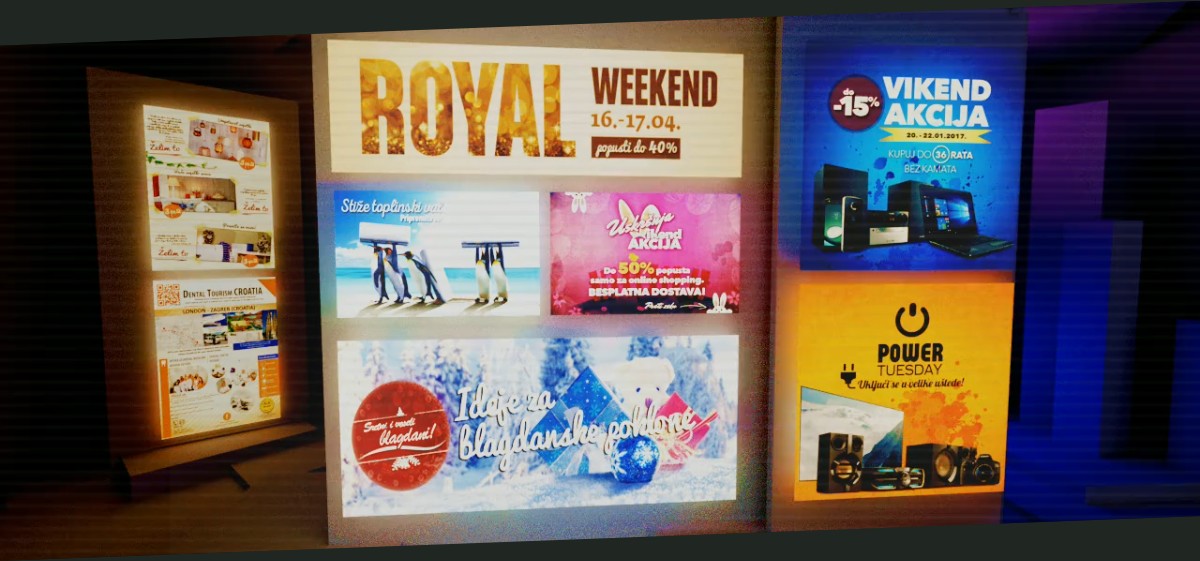
Campaigns, identity and web
↳ showcaseEngine prototype and autonomous simulation showcase
The enterprise case-study visuals are development-stage interface designs created in Figma, not screenshots of an implemented or production system. Names, avatars, identifiers, and scenario content are fictionalized; no production or personal data is shown. The final implementation may differ.
I led UX work on a manufacturing investigation platform, bringing specialist methods into a clear digital process. A few months after my engagement ended, colleagues told me the platform was being used by more than 10,000 users.
Client engagement · UX Design Lead and business analysis · RCA platform
The specialists knew manufacturing and investigation methods. My task was to understand how they actually applied them and turn that work into a connected digital process.
Fishbone, Is/Is Not, and 5 Whys needed to connect with the investigation: what the user was trying to establish, what information was already available, and what the next decision required.
Through research with specialists, process mapping, and collaboration with Product Owners and engineers, I connected user needs with the system's capabilities. I supported project planning, feasibility assessment, and shaping the direction before detailed design.
The Figma example shows how that approach carries into the product: guidance is available within the task, methods have clear entry points, and users retain an overview of the rest of the investigation.
I helped specialists, project leadership, and engineers build a shared understanding of the problem and translate it into workflows, prototypes, and implementation guidance.
Four decisions visible in this development-stage Figma design.
Key Contributions
Investigation Methodologies
Fishbone (Ishikawa)
Visual cause-and-effect diagram interface for categorising potential causes of manufacturing problems into systematic groupings.
Is / Is Not
Comparative analysis tool distinguishing specific problem characteristics by examining where, when, and how the issue does and doesn't occur.
5 Whys
Sequential questioning interface that guides investigators through iterative layers of causation to reach the true root cause.
Selected development-stage interface designs
Created in Figma during product development. All displayed names, avatars, IDs, and scenario content are fictionalized. Click an image to enlarge.
Cause review - fictionalized scenario
Fishbone workspace - fictionalized scenario
RCA workflow overview
Outcome
A few months after my engagement ended, colleagues at Roche told me the platform was being used by more than 10,000 users. My contribution included turning investigation methods into understandable workflows and reusable interface patterns, working with subject-matter experts and engineers.
Led UI/UX design for an Intelligent Authoring and regulatory-reporting product, producing approximately 120 UI designs and a reusable design system across dashboards, structured documents, metadata, permissions, and reporting workflows.
Overview
Designed workflows and interface patterns for pharmaceutical documentation management, including dashboards, metadata inheritance, role-based permissions, document relationships, versioning, validation states, and reporting views.
The role extended beyond interface design into workflow analysis, feasibility discussions, stakeholder alignment, implementation-ready work items, and enablement material for engineering teams.
Key Contributions
Process & Collaboration
Worked closely with Product Owners, Subject Matter Experts, and engineers using draw.io for system architecture mapping, organisational hierarchy documentation, data parsing process design, and wireframe development. Successful partnership with Product Owners facilitated task creation that was subsequently managed in Jira for both engineers and design.
Selected development-stage interface designs
Created in Figma during product development. All displayed names, avatars, IDs, and scenario content are fictionalized. Click an image to enlarge.
Project dashboard - fictionalized content
Metadata configuration - fictionalized content
Report configuration workflow
Outcome
Produced approximately 120 UI designs and a broader reusable design system, supported approximately 50 engineers across three teams, and contributed with the wider product team to a reduction of more than 30% in manual reporting effort.
This engagement is under active NDA. For scope and responsibilities, see the Experience section:
UI/UX Consultant | RFP/RFI & OSINT Vendor Due Diligence
Client engagement · Pharmaceutical projects · Vendor evaluation, RFP/RFI, and executive communication
Evaluating AI solutions required understanding what the technology could offer, how it fitted existing processes, and what introducing it would require.
I worked with project leadership, teams, and AI engineers on vendor research, structuring requirements, and preparing decision materials.
I connected business needs, user workflows, and technical constraints. I contributed to assessments of whether an existing system needed substantial reworking or whether the required functionality could be connected through APIs.
I translated findings into RFP/RFI materials, evaluation frameworks, and leadership presentations. A key part of the work was selecting what mattered to the decision, making open questions visible, and explaining trade-offs.
I worked closely with the project lead and teams to support decision preparation. My experience in UX, analysis, and visual communication helped connect technical details with the business questions leadership needed to resolve.
Market research drove a minimalist approach - storage over specs, colour-matched UI, black background for luxury. Awarded 'Best Promotional Landing Page' in Croatia (Appcom / Apple Partner, 2016).
View Live Demo3D interior visualisations created in 3ds Max for hospitality clients - then built for real. The low-res photos were taken on phones of that era, but the spaces speak for themselves.
3D Render
Built Result
3D Render
Built Result
3D Render
Built Result
Night Bar Venecija, Zagreb - designed and visualised in 2010, built the same year.
Experience
Standing Pillars - personal portfolio · Zagreb, Croatia
I develop personal digital products, UX prototypes and the Tiny Humans engine through structured AI collaboration.
Self-employed under the legal name Igor Pilicic | Austria
Accenture · Client contract during self-employment · Remote | Vienna, Austria
Roche Diagnostics · Client contract during self-employment · Hybrid | Penzberg & Mannheim, Germany
Roche Pharmaceuticals · Client contract during self-employment · Hybrid | Basel, Switzerland
Harvey Norman · Part-time · On-site | Zagreb, Croatia
Fazgram d.o.o · Full-time · On-site | Zagreb, Croatia
Bimaco d.o.o · Full-time · On-site | Zagreb, Croatia
Self-employed · Part-time | Zagreb, Croatia
How I work
I connect people, needs, and technology. When designing, I also consider what comes after delivery: everyday use, new users, and future improvements.
Time and product development
I listen to people and study their work to understand what actually needs solving.
I bring needs, constraints, and possibilities together so the team can choose a realistic direction.
I turn ideas into prototypes and designs, then test them with users and engineers.
I support implementation, explain decisions, and check that the result follows the agreed direction.
Feedback from everyday work shows what to keep, adapt, or improve.
I anticipate new users, additional workflows, and future improvements so the product can evolve more easily.
Feedback takes us back to earlier decisions. The product keeps moving forward.
Expertise
Senior UX/Product Design is my primary role. Business analysis, visual design, vendor evaluation, and AI-assisted delivery strengthen how I work within multidisciplinary teams.
I contribute most where complex requirements need to become clear decisions, usable interfaces, and practical implementation steps.
Research, workflow design, prototyping, and design systems for complex products, grounded in real user and specialist work.
Connects user needs, business rules, and implementation reality.
Explore this experienceA supporting capability developed through RFP/RFI work, scorecards, OSINT research, risk surfacing, and executive-ready communication.
Connects evidence and trade-offs to clear, traceable decisions.
Explore this experienceI connect visual identity, web, and digital products through experience in graphic design, e-commerce, branding, animation, and 3D visualisation.
Relevant to teams that value a designer who understands the full path from visual identity to working digital products.
Connects visual craft with usable digital delivery.
Explore this experienceSkills & Tools
Design
Procurement & Consulting
Design Tools
Collaboration & Process
Technical
Soft Skills
Independent Technical Project
Working prototype · In development
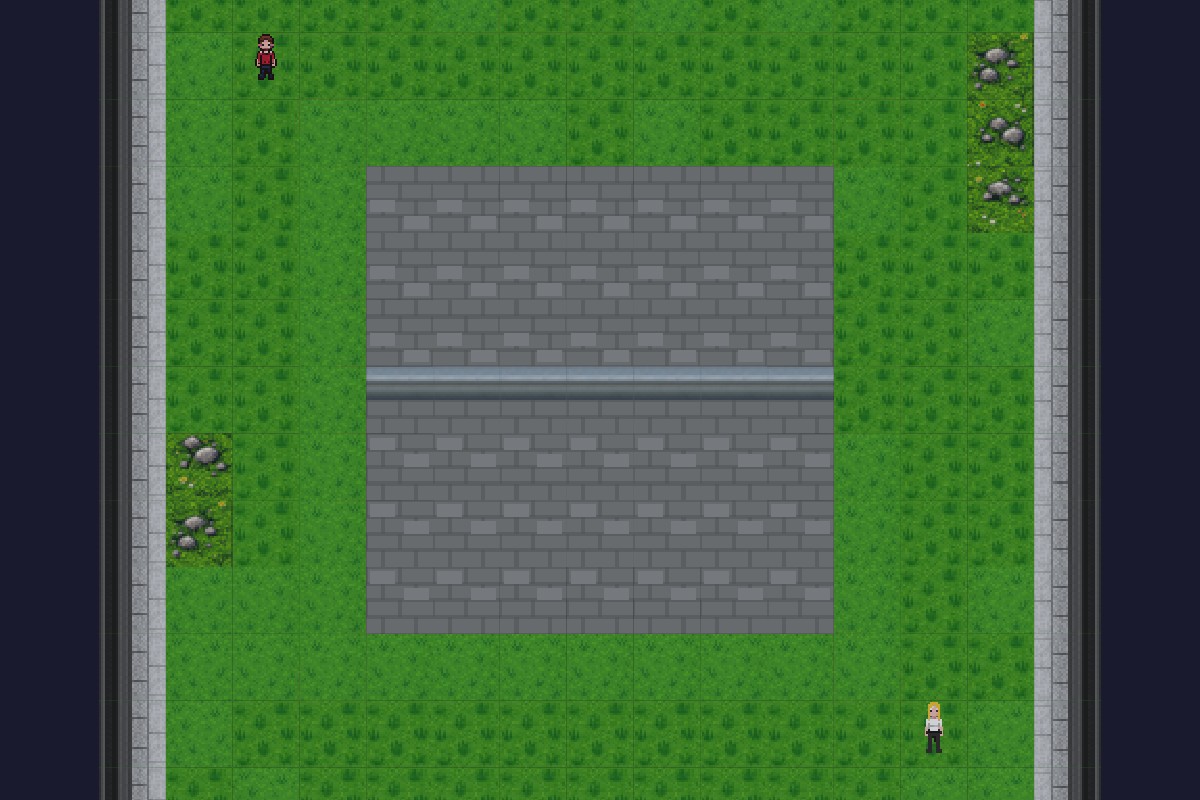
A personal 2D game engine and editor for building small worlds with autonomous characters. The simulation below is a working extract, not a playable game.
I define how the systems fit together, develop and check them through structured AI collaboration, and document the decisions. The project brings together my design experience, systems thinking and hands-on prototyping.
Tiny Humans is a 30,000+ line personal prototype with an editor, runtime, asset pipeline, scripting system, and packaging work. I used AI tools within a structured loop: Specify -> Architect -> Govern -> Validate. The project demonstrates how I define requirements, manage dependencies, test persistence, and document decisions. It is not a commercially released or production product.
SDK & Editor Progress
The prototype contains 29 major systems, but the broader editor and SDK concept is approximately 15% complete. The proof of concept below is a small extract of about 1,800 lines.
System Architecture
Engine Registry + Event Bus pattern decouples 29 systems. Modular design means any system (lighting, audio, NPCs, scripting) can be developed, tested, and updated independently.
Validation & Guardrails
A Save Validator checks seven categories of data integrity. A Feature Manifest reduces duplicate work, while persistence checklists support write, read, and round-trip verification.
AI Governance
Project-specific AI instructions define persistence checks, common bug prevention, architecture rules, and implementation workflows. Outputs are reviewed and tested rather than accepted automatically.
Implemented Prototype Systems
Ray-cast lighting with DDA shadows. AI state machines with faction targeting. 4-channel spatial audio. Scene management with map caching. 8-type logic gates with loop prevention. A full scripting SDK with Runtime API.
Specify
Define requirements with the precision of an RFP - scope, constraints, success criteria, integration points.
Architect
Design the system before writing code. Registry patterns, event flows, data models, persistence paths.
Govern
Copilot instructions, feature manifests, validation checklists. The AI follows rules, not vibes.
Validate
Save validators, round-trip testing, documented decisions. Every change is traceable and defensible.
This project does not replace professional engineering experience. It shows how I use structured AI collaboration, verification, and documentation to explore a technically complex personal idea.
It is supporting evidence of systems thinking, persistence, and hands-on prototyping.
Open to Opportunities
Let's talk about products, workflows, and teams I can contribute to through UX/Product Design, visual communication, business analysis, and digital delivery.
Phone
+385 92 502 9969Location
Based in Zagreb, Croatia · open to full-time, part-time and contract roles
On-site, hybrid or remote in Croatia, and suitable remote opportunities with European or US teams, subject to location eligibility and the employment or contracting arrangement.
Languages
Croatian - native; English - fluent; German - A2